Independence and mutual exclusion are different properties
No shared outcome does not substitute for checking probabilities.
Mutually exclusive events cannot occur together. Independence is checked by P(A∩B)=P(A)P(B), where the intersection means joint occurrence. These answer different questions; specify the experiment and events first.
What to do
- State the outcomes, their probabilities and which roll each event concerns.
- Find joint outcomes and compare their probability with the product of the individual probabilities.
- Keep separate conclusions, without calling independence and mutual exclusion universal opposites.
Example
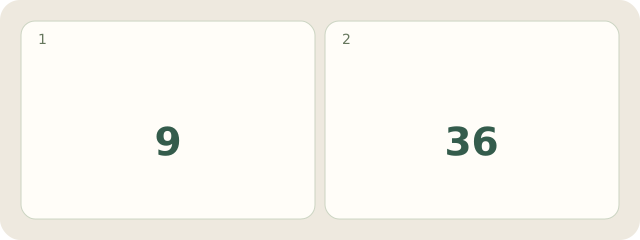
Fictional model: a fair six-sided die numbered 1–6. A=even and B=odd on one roll: joint probability 0, product 1/4; mutually exclusive but dependent. For two independent rolls, C=first even and D=second even: jointly 9 of 36 ordered pairs, 9/36=1/4=(1/2)(1/2). C and D are independent and can occur together.
My Day · Windows
My Day can store definitions and calculations as text. You check the model yourself.