For or since: duration or starting point
In an ongoing state, for six weeks gives a duration and since Monday gives a starting point.
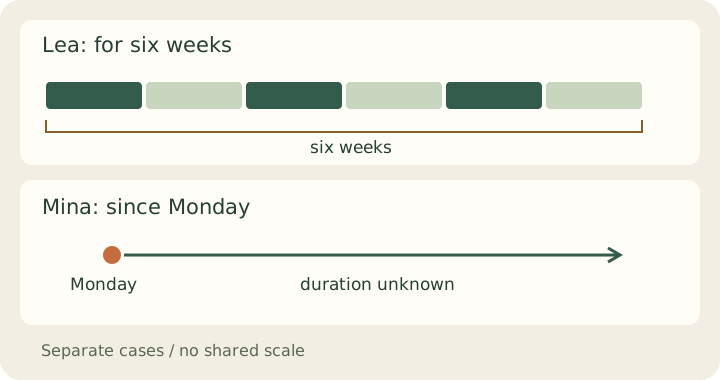
In these ongoing present-perfect examples, identify the meaning of the time expression first. Six weeks states a duration: for six weeks. Monday names a starting point: since Monday. These are two different fictional people; without an observation date, since Monday does not give an exact duration. This exercise does not cover every meaning of for/since or imply that for is used only with the present perfect.
What to do
- Decide whether the expression names a period or its beginning: six weeks and Monday have different roles.
- In the supplied ongoing contexts, choose for for the duration and since for the starting point, keeping the complete English sentences.
- Label the meaning of each phrase and test yourself without the labels. Do not equate Monday with six weeks or invent a calendar duration.
Example
Two separate fictional contexts: Lea has kept this notebook for six weeks. — duration: six weeks. Mina has kept this notebook since Monday. — starting point: Monday; duration unknown without an observation date.
My Day · Windows
In My Day, manually save the two English lines, meaning labels and a revision task. Check the rule in its source; My Day is not a grammar checker.