Reject an extraneous root introduced by squaring
A solution of the transformed equation remains a candidate until it satisfies the original equality.
Squaring both sides can introduce extraneous roots. For a real principal square root, check the domain and its nonnegative value separately. Then substitute every candidate into the original equation. Solving the resulting quadratic correctly does not by itself establish the original equality.
What to do
- Write the original equation, the radicand condition and the required right-side sign.
- Solve the squared equation while labelling its answers as candidates rather than final solutions.
- Substitute each candidate into the original and retain the reason for any rejection.
Example
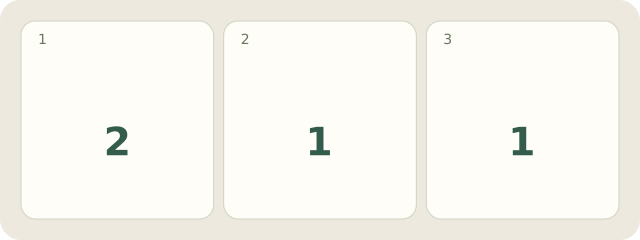
Fictional exercise: √(x+2)=x has domain x≥−2, while equality requires x≥0. Squaring gives x+2=x², or (x−2)(x+1)=0: candidates 2 and −1. Checks: √4=2; at −1, √1=1≠−1. Thus 2 candidates, 1 solution, 1 extraneous root; the radical at −1 is defined.
My Day · Windows
In My Day, manually save the check and your next action; verify the source yourself.