Self-discipline you can practise: make one realistic agreement with yourself
Self-discipline becomes easier to understand when you stop treating it as a personality verdict. Choose an action you can actually recognise, give it a place in your day and review what happened. This guide offers a practical experiment for study, personal projects and everyday work; it does not promise an instant change in character. Here, self-discipline means following a chosen course of action while taking real limits into account.
Make the agreement observable
“Be more disciplined” gives you no clear moment of completion. Replace it with an action and a boundary: after lunch, solve two algebra problems and check the answers. An employee could draft the first three points of a proposal before opening messages. Decide what counts as done, what materials are needed and when you may stop. An ambitious intention can remain in your project notes; today's agreement should fit the time and energy actually available.
Give motivation a useful job
Motivation helps you explain why an activity matters. It is less useful as a requirement that must appear before every session. Write one personal reason, such as being able to solve exam questions independently, then attach it to a small action. On a difficult day, use a reduced version agreed in advance. Reducing the scope is different from pretending you completed the original plan; record which version you really carried out. Motivation is the reason to act; self-discipline is returning to the agreed action. Self-control is pausing before an impulse and choosing a response. In everyday language, willpower describes the effort of making that choice; it is not a score we measure here.
Arrange the environment before testing your willpower
Put the required file, book or tool within reach and move optional distractions away. If you repeatedly postpone a task because you lack a document, make obtaining that document a separate action. Self-control also involves choosing when not to start another commitment. Before accepting extra work, look at what it would displace. A crowded list of promises is not evidence of strong discipline; it can simply hide conflicting priorities.
Review a missed agreement without a verdict on yourself
Ask whether the obstacle was unclear instructions, an unrealistic duration, missing resources or an interruption. Choose one repair you can test next time. If you planned thirty minutes but had only ten, schedule a smaller result rather than silently moving the same large task forever. Ordinary planning methods do not explain every persistent difficulty; when problems repeatedly disrupt daily life, seek appropriate support instead of escalating self-punishment.
A modest week of practice
On Monday, choose one useful commitment that fits each workday. On Tuesday, note the actual start and stopping point. Midweek, compare the plan with reality and change one obstacle. On Friday, look for concrete evidence: problems checked, paragraphs drafted or a task delivered. Avoid adding five new commitments merely because one session went well. A useful result is a repeatable agreement and a clearer understanding of your conditions, not a perfect streak.
Self-control, willpower and self-motivation in plain language
Self-control means noticing an impulse and choosing an action that fits a rule or goal: you want to interrupt but first listen. In psychology, self-regulation also includes observing what you do, comparing it with your intention and adjusting. Willpower is an everyday name for effort when an immediate wish competes with a chosen task. Self-discipline makes that intention a repeated practice. In education, an adult gradually shares manageable responsibility with a child. A citizenship example is waiting your turn without a reminder.
Self-motivation means finding your own reason to act and starting without constant prompting. A grade 9 or 10 example is: “I want to understand physics, so today I will work through one problem myself.” This follows the direction of CBSE learning materials on independent work; check your own syllabus for an examination definition.
For a child, self-motivation can be: “I want to build a house, so I will find the first piece myself.” An adult helps make the purpose understandable without having to prompt every step.
Helping a child practise self-discipline
Agree on one manageable action, such as returning five building pieces after playing. Demonstrate it, offer two acceptable times and leave a clear reminder. Do it together first, then let the child mark their attempt. Describe the action: “You put the pieces back.” After a missed attempt, find the obstacle and reduce the step. For a younger child, willpower might mean finishing two sentences before the next game. Sleep, food, safety and respect are basic needs, not rewards to withhold. Shouting and humiliation do not teach the skill.
A ten-day practice and an original workshop
This is an experiment, not a promise to change your character in ten days. Days 1–2: choose one action, a personal reason and a cue. Days 3–5: do the smallest version and record the fact. Days 6–8: identify one recurring obstacle and change the conditions. Days 9–10: compare your plan with events and choose the next small step. Workshop exercise: write “my reason — exact action — when — evidence — adjustment if interrupted”. Example: “To prepare for an assessment, I will solve one problem after dinner; I will save the working; if I arrive late, I will read the question and schedule the continuation.”
A self-check and original short quotations
This original self-check is not a diagnostic or validated psychological test. For the last seven days, count occasions when you noticed an urge to switch tasks, paused before replying, returned after a lapse or requested help before conflict. For communication, add one example of listening through and one of interrupting. Do not turn the total into a personality rating; choose one behaviour to practise next week.
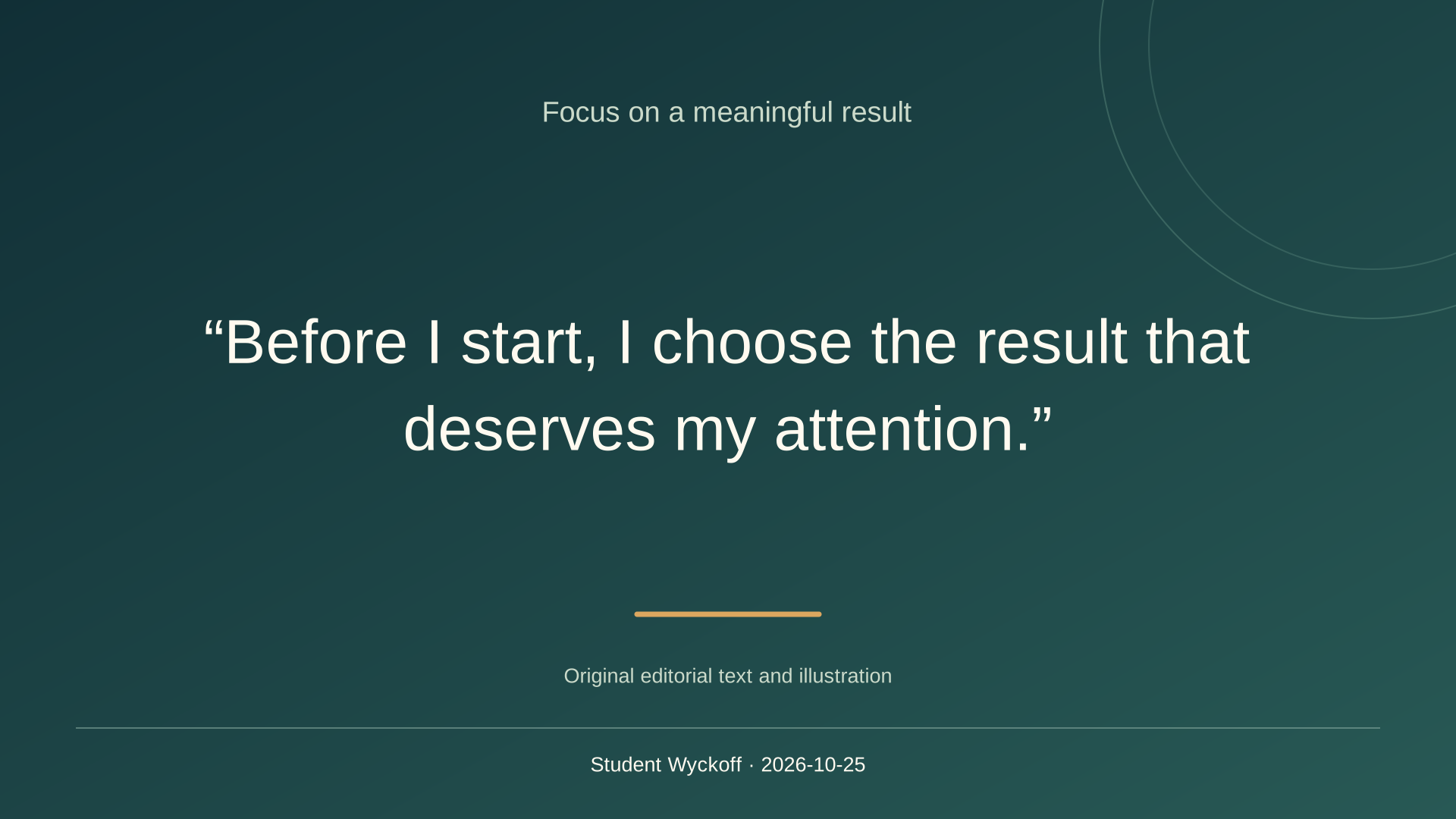
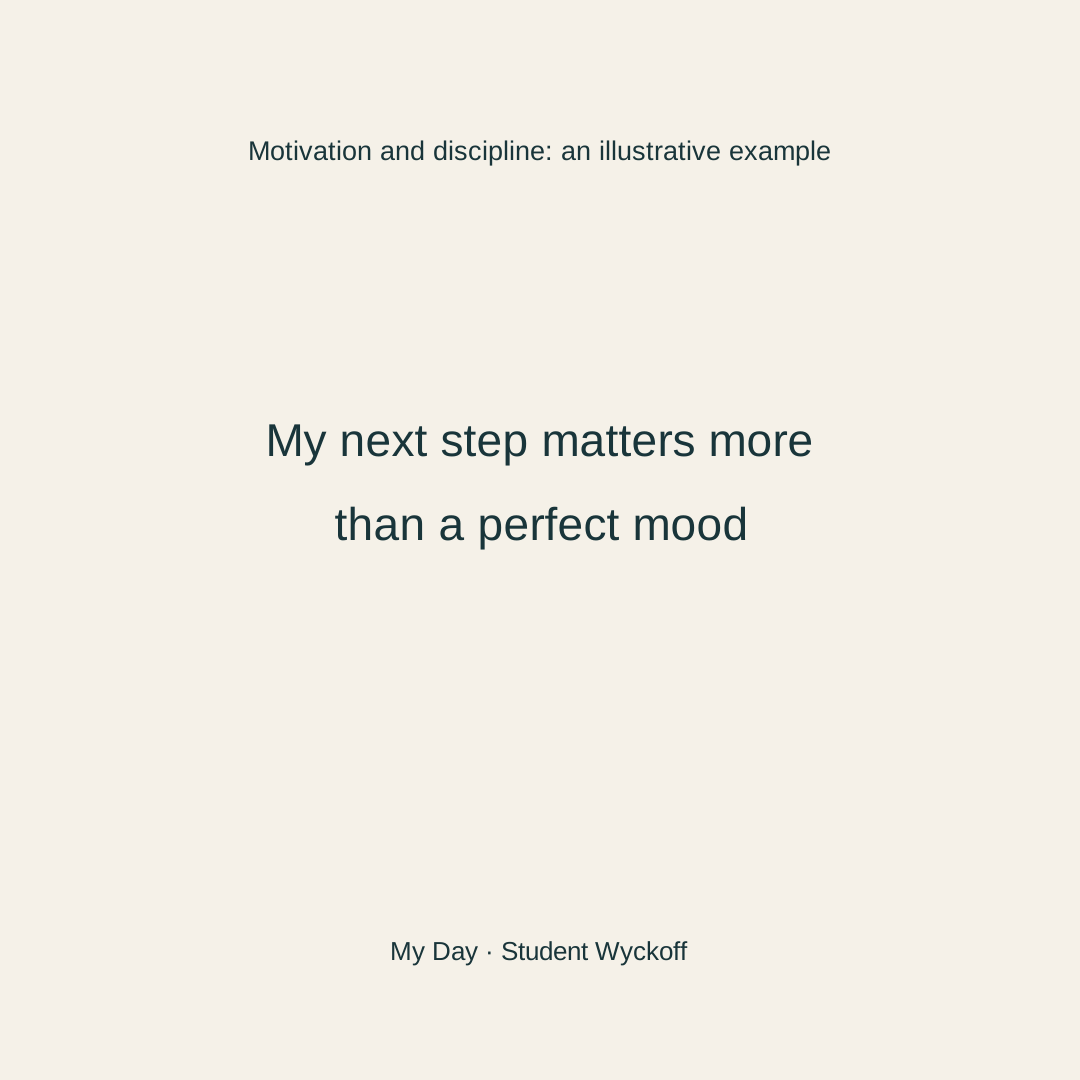
These lines were written by our editors and are not attributed to famous people: “My next step matters more than a perfect mood.” For students: “One completed exercise is movement.” For children: “I can try again with a smaller step.” For the gym: “A time in my calendar helps me show up.” For women balancing several roles: “My day has room for my own work.” A short caption: “One deliberate step today.” Use them as reminders; these are text quotations, not downloadable wallpaper or images.
Two more original editorial lines: “I can pause before I reply”; “Motivation gives me a reason; discipline gives my next step a time.”
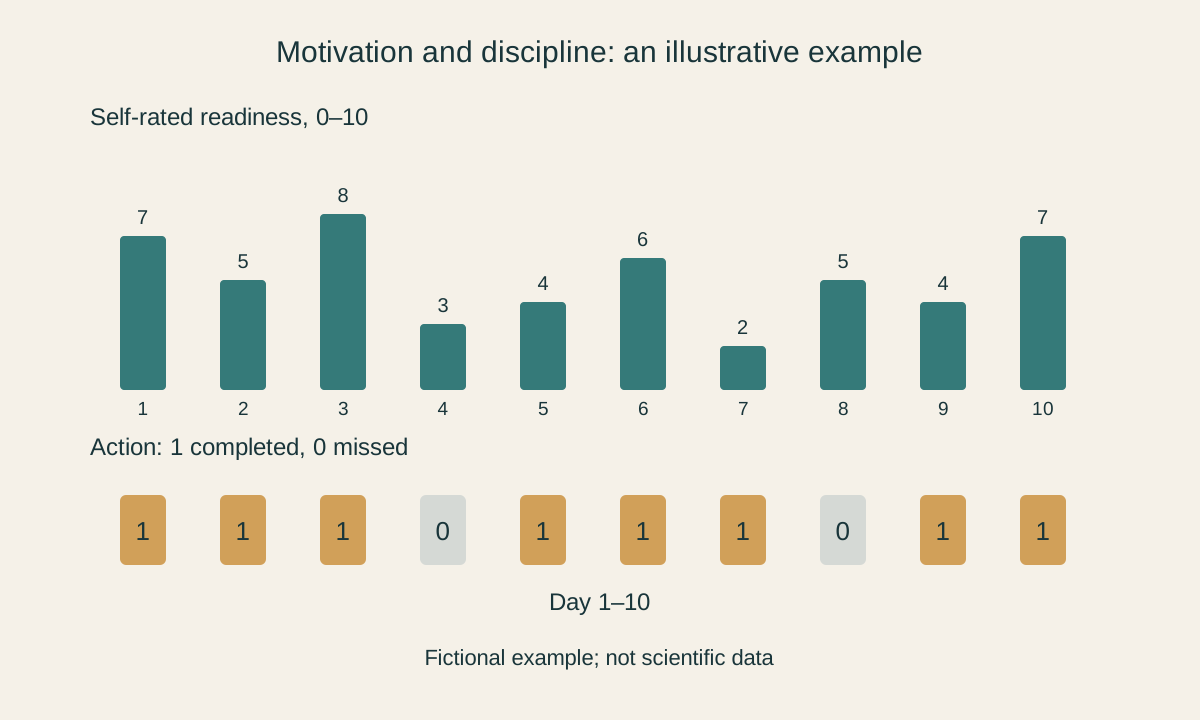
Motivation and discipline: an illustrative example
This fictional ten-day example is not research or a promise. The top panel shows self-rated readiness from 0 to 10; the bottom shows one small action completed (1) or missed (0). These are different measures and are displayed separately. Our editors wrote the card’s phrase. Download the SVG chart, square quotation card or portrait wallpaper: actual images with original words, not famous quotations.
Questions and answers
Does discipline mean working even when I need rest?
No. Include rest, meals and existing responsibilities when deciding what is realistic. Repeatedly breaking an impossible schedule does not tell you that you lack character.
How can I measure progress?
Compare specific planned actions with actual results and note the reason for changes. Keep time spent separate from the quality or completeness of the result.
Use the agreement in My Day
In My Day for Windows, put one concrete action into the daily plan. Use a project for the broader aim and notes for the reason and stopping point. The record supports your review; it does not perform the work or certify that a goal has been achieved.
- Write a task with a visible finishing condition.
- Use a focus session if a time boundary would help.
- Save the actual result and one adjustment for tomorrow.
Explore My Day for Windows ↗ · Full instructions for this action ↗