Align bilingual note segments by meaning
Do not pair sentences only by number: a translation may divide one sentence into several.
Align actions and participants rather than matching line numbers. A translation may split or combine sentences. In study notes, explicitly group the segments carrying the same meaning. This prevents a mechanical shift from assigning one person’s action to someone else.
What to do
- Label the segments and identify who performs each action in them.
- Connect equivalent meanings, allowing one segment to correspond to several segments.
- Check the remaining actions and save the alignment beside both original texts.
Example
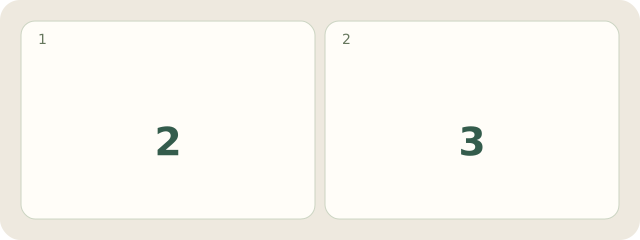
Fictional set: E1 “Nora opens the book and Ada closes the door.”; E2 “Mira waits.”; F1 “Nora ouvre le livre.”; F2 “Ada ferme la porte.”; F3 “Mira attend.”. Correct: E1↔F1+F2, E2↔F3; 2 English sentences and 3 French sentences. E2↔F2 would wrongly give Ada’s action to Mira.
My Day · Windows
In My Day, manually save the check and your next action; verify the source yourself.